Guidelines for submitting articles to Mar Menor Golf Resort Today
Hello, and thank you for choosing Mar Menor Golf ResortToday.com to publicise your organisation’s info or event.
Mar Menor Golf Resort Today is a website set up by Murcia Today specifically for residents of the urbanisation in Southwest Murcia, providing news and information on what’s happening in the local area, which is the largest English-speaking expat area in the Region of Murcia.
When submitting text to be included on Mar Menor Golf Resort Today, please abide by the following guidelines so we can upload your article as swiftly as possible:
Send an email to editor@spaintodayonline.com or contact@murciatoday.com
Attach the information in a Word Document or Google Doc
Include all relevant points, including:
Who is the organisation running the event?
Where is it happening?
When?
How much does it cost?
Is it necessary to book beforehand, or can people just show up on the day?
…but try not to exceed 300 words
Also attach a photo to illustrate your article, no more than 100kb
article_detail
Date Published: 20/02/2026
Spain's minimum wage keeps rising - so why aren’t most salaries keeping up?
ARCHIVED ARTICLE -
Experts say recent hikes mainly lift the lowest earners while average pay still lags behind Europe
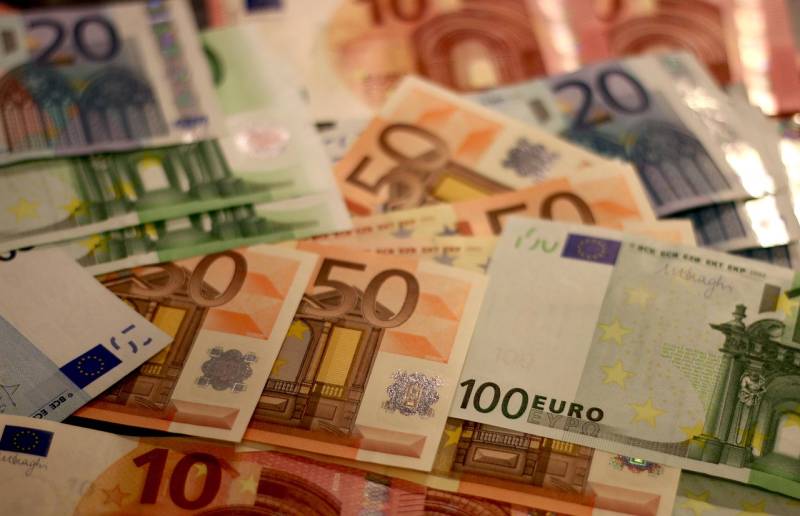
When Spain signed off the latest minimum wage rise to €1,221 a month earlier this week, it was sold as another boost for the country’s lowest earners and a way to shore up living standards in an inflationary climate. The government agreed a 3.1% increase in the SMI (Salario Mínimo Interprofesional - Spain's legal minimum wage) for 2026, adding €37 a month and taking the annual gross minimum to €17,094.
Now the obvious follow‑up question is on the table in Congress: if the minimum keeps going up, why do so many other wages feel stuck? Finance Minister María Jesús Montero told MPs she hopes the SMI “will continue to rise and act as a catalyst for collective bargaining agreements to update other wages”. She also urged employers to sit down and renegotiate deals that are still below the new legal floor, stressing that “the government is calling on employers to revive collective bargaining agreements, because there are agreements that fall below the SMI, and this requires employers to sit down and negotiate.”
Economists are clear that the effect is real, but limited. “It is not automatic,” explains Julen Bollain of Mondragón University, “but the increase in the minimum wage usually has a knock‑on effect on wages closer to the minimum wage to avoid wage compression and retain staff.” Beyond that, he says, the rest of the pay scale “depends more on collective agreements, productivity, and profit margins.”
Labour market specialist Antonio González agrees that the big SMI rises since 2018 have already transformed the bottom end of the wage ladder. “In 2018, the minimum wage affected fewer than 200,000 workers, and today it affects more than two million,” he notes. He estimates that the latest increases “lead to a 20% increase in salaries, at the lowest levels,” but warns that “whether it affects the entire salary scale is another matter, because the salary distribution in Spain is completely compressed at the lower end of the range.” His conclusion is blunt: the SMI has “almost no influence” on average pay or on higher salaries.
The numbers from the National Institute of Statistics (INE) underline how many people are clustered around the minimum. In 2023, 18.51% of workers earned the minimum wage or less, while 48.65% earned between one and two times the minimum. Only 32.83% earned at least double the minimum wage. Average gross monthly pay has risen from €1,982.30 in 2019 to €2,385.60 in 2024, but it still sits only at around twice last year’s minimum and remains, according to economist Manuel Hidalgo, between 10% and 15% below the EU average.
So why are wages in Spain so low, and so slow to move? Bollain points to a long list of structural factors: a heavy reliance on low value‑added sectors such as hospitality, retail and parts of tourism; high temporary employment and staff turnover; the prevalence of part‑time work; and a labour market dominated by smaller, less productive companies. On top of that, he argues, there is “weak collective bargaining in many sectors and high structural unemployment that keeps wages in check,” combined with a competitive model “based too much on costs and not enough on innovation.”
González adds historical context, describing Spain as having “the lowest wages among the 15 Western European countries that are part of the European Union.” He says that “in the last 40 years, wages in Spain have grown less than productivity,” with much of the gain going to company profits. He also highlights the spread of part‑time work, “four million workers who do not receive a full annual salary,” and points back to the 1994 labour reform as the moment collective bargaining power was “drastically weakened,” something he believes had “a decisive impact on wage trends in the following years.”
In the political arena, the latest increase has reignited tensions between government and business. Economy Minister Carlos Cuerpo has insisted the new SMI level is “perfectly manageable” for companies and prefers to see “the glass half full,” noting that “in the last two and a half years, 50% of jobs have been created in the five highest‑paying sectors” and arguing this shows Spain is “breaking the cycle of increasingly smaller, less productive companies.” Business leaders have criticised the rise, while Prime Minister Pedro Sánchez has called it “unacceptable that, in a context of economic prosperity, the salaries of those earning the minimum wage are scrutinized, while people look the other way when multimillion-euro profits are recorded,” vowing that “Spain will not return to the ‘work more and earn less’ model.”
For now, the picture is mixed: strong, repeated pushes at the very bottom, but a long, slow grind for everyone else. The minimum wage clearly sets a legal and practical floor, and lifts millions close to it, yet without stronger bargaining power, higher productivity and a shift in the economic model, experts warn it will not be enough on its own to pull the whole salary ladder up.















 When Spain signed off the latest minimum wage rise to €1,221 a month earlier this week, it was sold as another boost for the country’s lowest earners and a way to shore up living standards in an inflationary climate. The government agreed a 3.1% increase in the SMI (Salario Mínimo Interprofesional - Spain's legal minimum wage) for 2026, adding €37 a month and taking the annual gross minimum to €17,094.