









Spanish News Today Editors Roundup Weekly Bulletin July 10
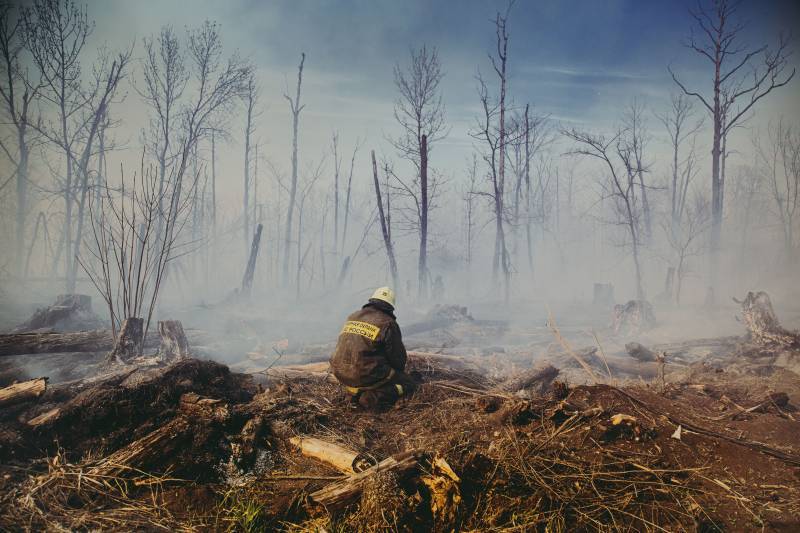
TOP STORIES: "Wildfires and heat-related deaths reach staggering levels as summer kicks into gear" & "New EU travel permit for Brits could be pushed back (again!)"
This Monday just gone, the Earth reached aphelion, the single furthest point from the Sun in its entire yearly orbit, but instead of buying us all a bit of a break from the punishing heat, here in Spain it meant heat alerts and temperatures pushing 43ºC.
It’s been a scorcher of a week all round, with the heat and the wildfires competing for space with the latest on the EU travel visa situation, alongside the usual mix of Murcia, Spain, Alicante and Andalucía news. Here’s your bulletin for July 10:
Cruel, cruel summer
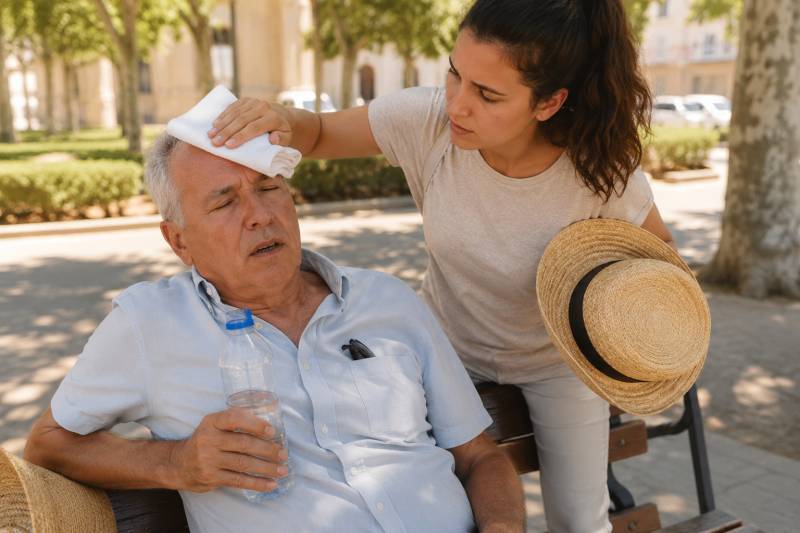
If you were looking for proof that seasons have nothing to do with how close we are to the Sun, this was the week for it. Monday marked the aphelion, the point in Earth’s orbit where we sit furthest from our star, roughly 152 million kilometres away and some 5 million kilometres further out than back in January. But instead of a reprieve, Spain got a yellow warning that flipped orange within 24 hours, with inland areas hitting the low forties in the shade.
The explanation is all about tilt rather than distance. Earth’s axis sits at 23.5 degrees, and with the northern hemisphere currently angled straight at the Sun, that’s what drives summer heat regardless of how far away we technically are.
Kepler worked out the elliptical orbit business back in 1609, annoying the Catholic Church in the process, and one quirk of that discovery is that northern summers actually run about five days longer than winters, because Earth moves slightly slower the further out it gets. None of which makes much difference if you’re stuck outside in Badajoz at midday.
And plenty of people have been. A second heatwave officially arrived on Sunday July 6, pushing fourteen regions onto weather alerts and temperatures past 42ºC across large parts of the country. The human cost is already stacking up: 153 deaths attributable to high temperatures were recorded in just the first days of July, according to the Carlos III Health Institute’s mortality monitoring system.
That’s on top of a June that was, by some distance, the deadliest month for heat-related deaths in Spain’s recorded history, with close to 1,000 lives lost. Catalonia currently leads the July regional count with 57 deaths, followed by Andalucía on 24 and the Basque Country on 18.
Seven regions, including Andalucía, Aragón and Madrid, remain on orange alert, and the Ministry of Health (and us, for that matter) are repeating the same advice as ever: drink water regularly, stay indoors during the hottest hours, and keep a close eye on the very young, the very old and anyone working outside.
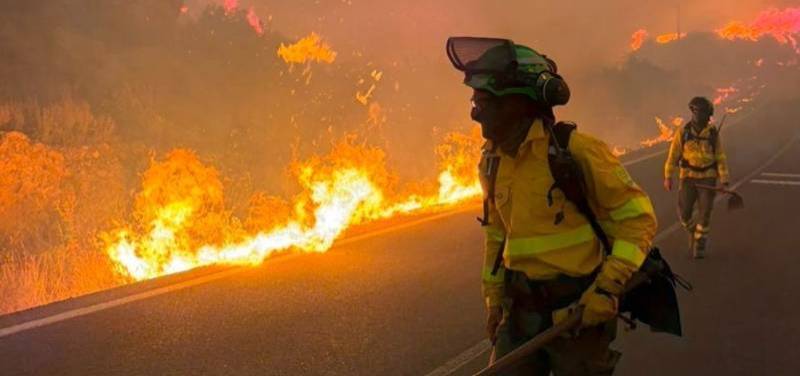 As if that weren’t enough, Spain’s wildfires have already burned through 50,384 hectares this year, which works out at nearly 40% of everything burned across the entire European Union over the same period.
That’s a 141% jump on this time last year, and the worst of the summer season hasn’t even arrived yet. Catalonia had a particularly grim few days, with firefighters battling several blazes at once, the most serious being the Sentmenat fire near Barcelona, which triggered lockdowns in seven residential areas as crews tried to stop it reaching the El Fairell neighbourhood.
Down in Andalucía, a fire in Cádiz's Grazalema area has now been stabilised, but a fresh blaze broke out in Barbate on Tuesday afternoon, with more than 50 crews deployed, and another has started near Moguer in Huelva. Meanwhile, at least 11 people have died this week in a wildfire that is currently tearing through the town of Los Gallardos in the province of Almería – a blaze that has now become the deadliest wildfire of the 21st century so far.
Not only that, but most of the victims of the fire are believed to be of British or Belgian origin, according to Andalusian regional government officials. The area has a large number of foreign residents, with the most recent census showing British citizens make up 1,024 of the Los Gallardos’s 2,841 registered residents.
🔴 #IFLosGallardos (#Almería). Estas imágenes nos ayudan a entender la magnitud de este incendio y las condiciones en las que han trabajado los bomberos forestales. pic.twitter.com/YCUFZ39OQt
— EMA INFOCA (@Plan_INFOCA) July 10, 2026
The European Parliament has, at least, approved €120.55 million from the EU Solidarity Fund to help Spain recover from last year’s fire season, when almost 400,000 hectares burned across 16 regions.
Let’s see how much they will have to approve next year to fix this year’s mess…
Every Time It’s Additionally Suspended
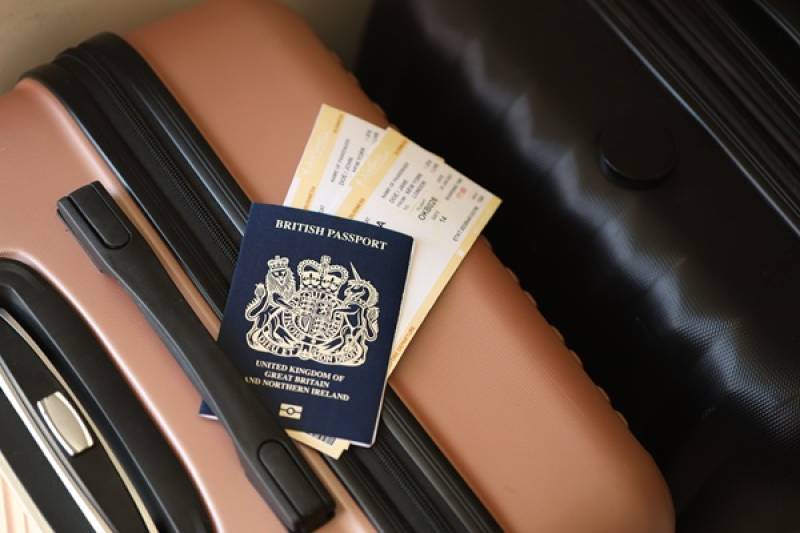
All of you who have been bracing for the fresh round of EU border bureaucracy can breathe out, at least for now, as the European Travel Information and Authorisation System (ETIAS), the €20 pre-travel permit that will eventually be required of visa-exempt visitors including Brits, looks unlikely to launch before 2027.
It was meant to arrive this year, if you remember, hot on the heels of the already-delayed Entry/Exit System (EES), which requires fingerprints and facial scans at the border, but officials at EU-Lisa are reportedly keen to iron out the ongoing technical problems with EES before adding a second new system into the mix.
One person involved in the discussions put it bluntly: “Let’s clean up EES first.”
The scheme, often compared to the US ESTA, will eventually cover around 1.4 billion visa-exempt travellers once it does launch, and airlines and airports had already warned it could cause serious queues if introduced badly… as many have already accused the biometric EES system of doing in major European airports.
For now, the European Commission won’t confirm a start date for the introduction of ETIAS until EU-Lisa says the system has been properly tested, and the whole timetable is likely to be revisited this September. Expect news of more delays in a couple of months, then.
Murcia
 To Cartagena now, where new ground-penetrating radar scans suggest the city’s Roman Amphitheatre may be even bigger than previously thought. The 1st-century venue, believed to have held between 10,000 and 11,000 spectators in its heyday, has already revealed possible hidden structures along with previously unknown entrances and passageways.
The city council is now ploughing another €2 million into excavating the arena area and preserving part of the old bullring built on top of it. Cartagena really does seem to produce a new Roman discovery every few months at this point.
Staying with big regional projects, Murcia has approved a new affordable housing law aimed squarely at the sneaky extras that inflate the final price of a new-build home. From Wednesday, developers won’t be able to value garages and storage rooms at more than 60% of a property’s price, or uncovered terraces at more than 40%, and all affordable homes will need a minimum floor area of 35 square metres.
There’s also a new fast-track planning process that could cut approval times in half, plus incentives for building on former industrial land and, in Cartagena and Lorca especially, on sites with archaeological remains. Given that house prices in the Region rose 16.5% in the first quarter of this year alone, something clearly had to give.
Elsewhere, Murcia has become home to Spain’s first dedicated water emergency response centre, a facility run by Veolia in the Cabezo Cortao industrial estate that will help keep supplies running during floods, droughts and other major incidents.
It houses 383 pieces of equipment, from generators to portable desalination plants, and although it was only officially opened this week, it’s actually been fully operational since last October and has already responded to 54 emergencies. Murcia was chosen as the pilot location thanks to its, let’s say, extensive recent experience with floods, droughts, heatwaves and water contamination.
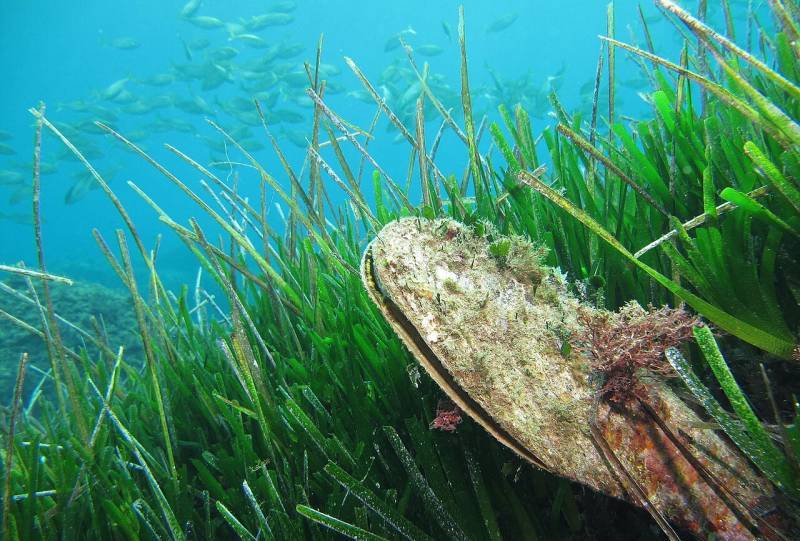 Down at the Mar Menor, meanwhile, there’s some good ecological news for once. The lagoon has become one of the last safe havens in Spain for the fan mussel, a giant shellfish that can grow over a metre long and was almost wiped out across the Mediterranean by disease in 2016.
A new six-year, €2 million recovery plan covering more than 28,000 hectares of coastline is now in place, and researchers have recently confirmed the first evidence of young mussels reproducing naturally since the 2016 crisis. There could even be temporary anchoring restrictions in some areas if monitoring shows the population needs extra protection.
Back on dry land, a petition is calling for stronger fire prevention measures in El Valle and Carrascoy Regional Park after a blaze on one of the first hot days of summer burned 177 hectares and forced nearby homes to evacuate.
Campaigners want better access control at the busiest entrances, new hydrant points, cleaner firebreaks and more frequent patrols, arguing that the growing wildfire risk means the authorities need to act before the next fire rather than after it. You can sign the petition here.
And finally, some feel-good news out of Alhama de Murcia, where 135 local children have just finished the town’s first-ever Real Madrid Foundation Campus at the José Kubala Sports Complex.

Mayor Rosa Sánchez said arranging it “was not easy” but that the results made it worthwhile, and with every place on the camp filled, the council is already hoping to bring it back next year. Former Real Madrid player Ricardo Gallego was on hand for the closing ceremony, and even walked away with a watercolour painting of the town as a keepsake.
To see any events coming up soon in the Murcia area, have a look at our EVENTS DIARY:
Spain
Spain might be one of Europe’s fastest-growing economies, but the OECD says wages still haven’t caught up with inflation. Its latest report, published this week, found that real wages rose by around 2% over the past year but remain 2% lower than they were in the first quarter of 2021, meaning many workers are, in effect, still poorer than before the pandemic.
Spain also still has the highest unemployment rate of any OECD country, and while the sharp fall in temporary contracts since the 2021 labour reform is real progress, the OECD points out that a good chunk of that shift has simply moved into “discontinuous permanent contracts”, which are technically permanent but can still leave people with long unpaid gaps between jobs.
 If you’re planning to fly anywhere with a pet this summer, it’s worth double-checking the paperwork before you get to the airport. Passenger rights platform Flightright says confusion over airline rules is increasingly leaving pet owners facing unexpected costs, or even being turned away at the gate, with cabin fares for animals ranging from €35 to €175 and hold travel on long-haul routes sometimes topping €300.
On top of that, EU rules now require dogs travelling within the bloc to carry a pet passport, be microchipped and have a rabies vaccination given at least 21 days before travel. Get any of it wrong, and airlines are within their rights to deny boarding, with no compensation owed.
And in a story that could shape the country’s demographics for years to come, most of the nearly 1.25 million people who applied to legalise their status in Spain before last month’s deadline could be eligible for citizenship within just two years, rather than the usual 10.
That’s because around 67% of applicants come from Latin American countries, which benefit from Spain’s historically shorter naturalisation route. Colombia led the nationality breakdown at almost 26% of applications, followed by Morocco and then Venezuela.
It’s worth pointing out that passport approvals are not automatic, and applicants still need to prove continuous residency, a clean record and integration into Spanish society, but for a huge number of people, what looked like a one-year work permit could turn out to be the first step towards an EU passport and a major boost in freedom.
Alicante
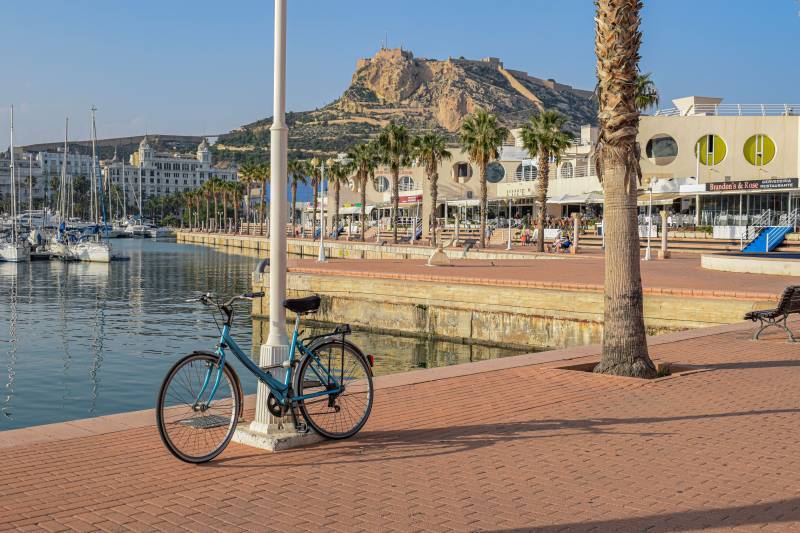 Alicante province is having something of a moment when it comes to cycling. Six of the province’s municipalities have just picked up La Vuelta’s “Más Bici” seal, recognising municipalities that have made cycling part of everyday life rather than just a summer tourist draw: Torrevieja, Benidorm, Calpe, Castalla, Orihuela and Villena.
Benidorm’s award drew particular praise for its 130-kilometre cycling network and its smart parking system linked to the city’s low emissions zone, with the local sports councillor calling it confirmation of the effort put into building those lanes. It brings the total number of Spanish towns in the national network to 23.
Benidorm is having a good fortnight generally, in fact, after also being shortlisted as one of eight finalists for the European Green Leaf Award 2028, beating out 27 other nominations in the process. Judges praised the resort’s work on water management, its emissions performance despite huge visitor 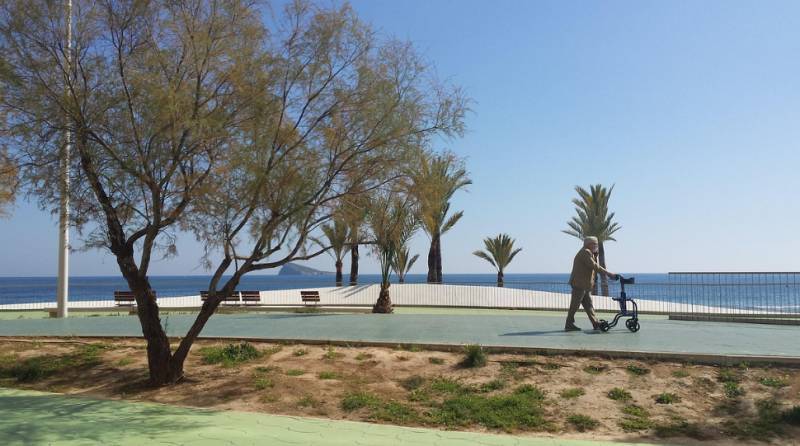 numbers, and its use of green infrastructure to tackle the urban heat island effect. Not bad for a city more usually associated with high-rise hotels and boozy holidays than sustainability credentials.
numbers, and its use of green infrastructure to tackle the urban heat island effect. Not bad for a city more usually associated with high-rise hotels and boozy holidays than sustainability credentials.The winners will be announced in October in Guimarães, with up to two cities sharing the honour and €200,000 each to put towards further environmental projects.
Sadly, there was tragedy on the water too this week. A 36-year-old woman from Dénia died after being struck by a boat propeller off Jávea’s La Caleta beach last Sunday evening.
The woman had reportedly been out with friends on a rented boat, taking part in a towing activity using an inflatable donut float, when it capsized and threw several people into the water.
During the rescue, the boat struck her, leaving her with extremely serious injuries; despite the efforts of the Red Cross and a SAMU medical team once she reached port, she couldn't be saved. The Guardia Civil is investigating.
Andalucía
Over in Andalucía, a Seville teacher known locally by the wonderfully whimsical name ‘Quique Bolsitas’ made headlines after he spent four hours walking 15 kilometres of Doñana National Park beach and came back with more than 200 jerrycans of fuel, some still full, dumped by the drug-running speedboats that operate along this stretch of coast. And this is not his first rodeo either.
Back in May, Mr Bolsitas pulled more than 500 jerrycans and over 1,000 tyres out of the Guadalquivir riverbank on the other side of the park. His frustration is entirely understandable: if one man with a bin bag can manage a clean-up like this, it’s not obvious why the authorities responsible for one of Europe’s most important protected wetlands haven’t already done the same.
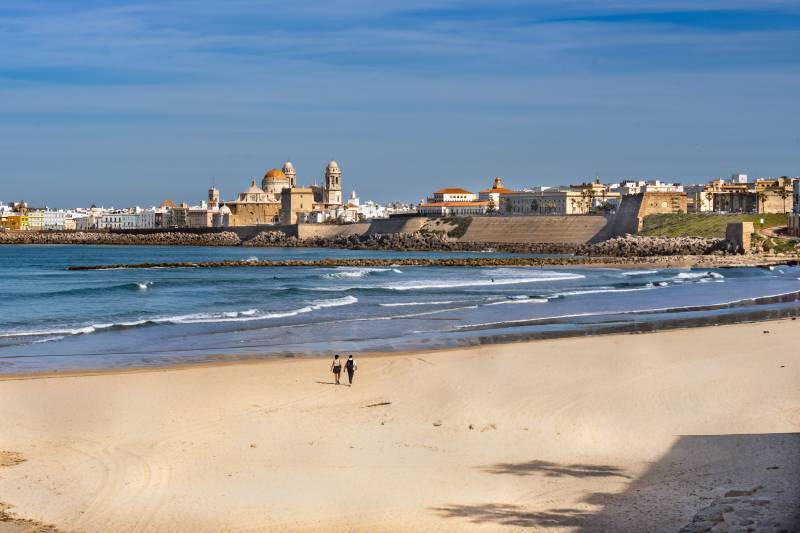 Further along the coast, the annual scramble to rebuild Cádiz’s beaches before the summer crowds arrive is getting harder every year. The central government approved €6.2 million in emergency funding this year to regenerate sand and repair infrastructure across 11 municipalities, from Cádiz city to Tarifa.
Camposoto beach in San Fernando needed the biggest intervention of all, with nearly 179,000 cubic metres of sand pumped in at a cost of more than €1.8 million, while at Tarifa’s Punta Paloma, machinery is now working almost constantly just to keep sand off the only road serving around sixty homes. Residents say the same battle has been going on for more than two decades, and there’s no sign of it letting up.
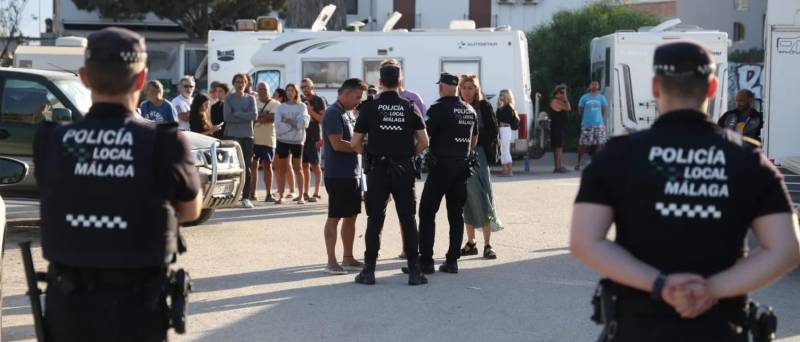
And finally, a story that’s more complicated than the headline suggests. Police in Málaga moved in on Wednesday to clear some 60 motorhomes still parked at Sacaba Beach after a council deadline for them to leave had passed unheeded.
Neighbouring residents, some of whom have lived there for six decades, describe years of noise, waste being discharged onto the sand and even threats when they’ve tried to raise concerns. But residents of the caravan community tell a rather different story, one of people who simply can’t afford Málaga’s rents and are asking not for handouts but, as one put it, to “live with dignity”.
Perhaps the most difficult case belongs to a man diagnosed with leukaemia last year, whose bone marrow transplant was made conditional on him having suitable housing to recover in. That housing never materialised, and his disease has now progressed to the point where the transplant is no longer possible. Whatever the rights and wrongs of this particular eviction, the housing pressure that brought people to the beach in the first place isn’t going away any time soon.
You may have missed…
- Important update from Camposol's Legal Platform against Biogas.
Camposol Legal Platform against Biogas representatives met with Mazarrón Town Hall’s Councillor for Camposol, Carmen Navarro to discuss the latest development in the process to define distance limits for the installation biogas plants in relation to populated areas. - Taking the train in Spain this summer? Here's what you’re owed if it’s late or cancelled.
Knowing your rights before you travel could save you money, so it’s worth a few minutes of your time, wouldn’t you say? - Alarm in La Manga as dozens of dead fish appear near Mar Menor shoreline.
Residents and holidaymakers in La Manga were left deeply concerned on Wednesday morning after dozens of dead fish were spotted floating near the shoreline of the Mar Menor, raising fears of a possible new environmental incident in the troubled lagoon. - Smoke fills skies over San Javier as twin fires break out along the AP-7.
Drivers along the AP-7 motorway also got quite a fright on the afternoon of that same Wednesday when two separate fires broke out within minutes of each other, sending thick plumes of smoke over San Javier and San Pedro del Pinatar that were visible for miles around. - The best places in Spain to experience the 2026 total solar eclipse.
Millions will look skyward on August 12 as Spain experiences its first total solar eclipse in more than a century… where will you be for it?!
That’s all for this week. Thank you for reading and we’ll see you again for more next Friday.
’Til then!