Guidelines for submitting articles to Mar Menor Golf Resort Today
Hello, and thank you for choosing Mar Menor Golf ResortToday.com to publicise your organisation’s info or event.
Mar Menor Golf Resort Today is a website set up by Murcia Today specifically for residents of the urbanisation in Southwest Murcia, providing news and information on what’s happening in the local area, which is the largest English-speaking expat area in the Region of Murcia.
When submitting text to be included on Mar Menor Golf Resort Today, please abide by the following guidelines so we can upload your article as swiftly as possible:
Send an email to editor@spaintodayonline.com or contact@murciatoday.com
Attach the information in a Word Document or Google Doc
Include all relevant points, including:
Who is the organisation running the event?
Where is it happening?
When?
How much does it cost?
Is it necessary to book beforehand, or can people just show up on the day?
…but try not to exceed 300 words
Also attach a photo to illustrate your article, no more than 100kb
article_detail
Date Published: 08/05/2026
Spanish police pull off biggest cocaine seizure in world history
ARCHIVED ARTICLE -
One of the raids carried out by Spain’s Guardia Civil resulted in the largest single cocaine seizure ever recorded worldwide
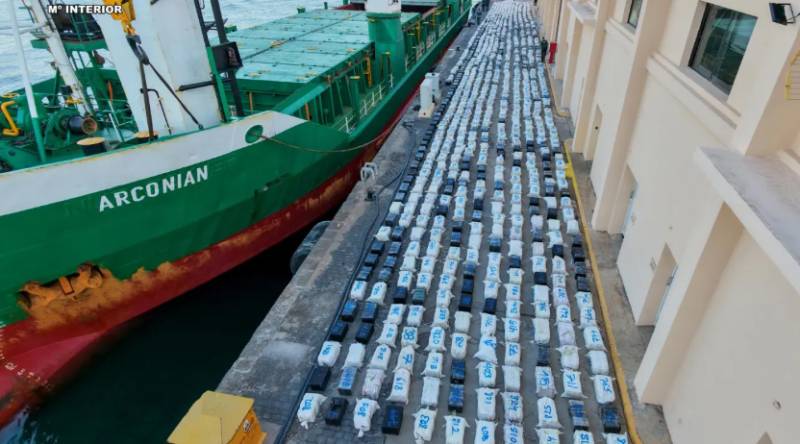
The Spanish authorities have announced what is being described as the biggest cocaine seizure ever carried out in a single police operation anywhere in the world after the Guardia Civil intercepted a vessel carrying 30 tonnes of cocaine in the Atlantic Ocean.
The massive drugs bust formed part of two separate anti-trafficking operations which together resulted in the seizure of more than 41 tonnes of cocaine, alongside 8.5 tonnes of hashish, weapons, fuel and dozens of vessels and vehicles.
A total of 77 people were arrested during the operations, which stretched across the Atlantic and involved actions in the Canary Islands, Andalucía, Murcia and several major Spanish ports.
Spain’s Interior Minister Fernando Grande-Marlaska described the raids as a major victory against organised crime.
“Beyond the operational success, both operations demonstrate our ability to make a significant strategic leap in how we approach the fight against transnational organised crime, with intelligence and resources to simultaneously strike at its transport routes, its logistical infrastructure, and its financing mechanisms,” he said.
The largest seizure came during an operation named Abisal, carried out on May 1, when officers intercepted the vessel Arconian at sea with around 30 tonnes of cocaine on board.
According to police sources, the ship had sailed from the coast of West Africa, although investigators believe the drugs themselves originated elsewhere. Officials have not confirmed where the shipment was ultimately heading, saying Spain may not have been the final destination.
The Guardia Civil said six armed men were guarding the cargo aboard the vessel and were carrying MP4 assault rifles and Glock pistols when officers moved in.
Investigators believe the shipment was linked to the notorious Mocro Maffia, a network of criminal organisations with roots in the Netherlands that is heavily involved in cocaine trafficking across Europe.
The other operation, known as Alfa-Lima, took place between April 13 and 26 and involved coordinated raids at sea and across several parts of Spain, including Huelva, Cádiz, Málaga, Jaén, Almería and Murcia, as well as ports in Ceuta and Algeciras.
That operation alone led to the seizure of nearly 11 tonnes of cocaine, 8.5 tonnes of hashish, 21 kilos of marijuana and around 30,000 litres of fuel used by trafficking networks operating on the high seas.
The operation involved cooperation between the Guardia Civil, the Spanish Navy, Customs Surveillance, Portugal’s National Republican Guard and Italy’s Financial Police.
Mr Grande-Marlaska rejected suggestions that Spain itself had become infiltrated by a single dominant criminal cartel, insisting that several different international networks were involved instead.
“It’s not a single organisation; it’s several criminal organisations that are primarily dedicated to smuggling large quantities of cocaine,” he explained.
The minister added that, based on current intelligence, Spain does not face a broader problem of organised criminal infiltration linked to these trafficking groups.