

















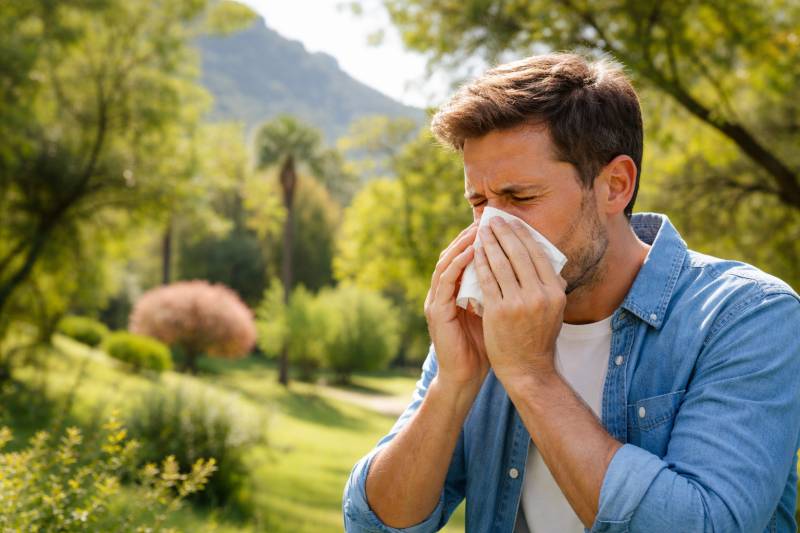
Murcia is known as the 'Garden of Spain'. There are lots of parks, green spaces, and Murcia is surrounded by pine forests and farmland. This is great, especially when you want to visit during the almond and cherry blossom season, but if you suffer from allergies, being surrounded by greenery can become a problem.
That's especially true this year, as experts have warned that this pollen season could be tougher than usual. After a pretty wet and grey start to the year, combined with a rise in temperatures that is common this time of year in Murcia, this all may lead to stronger pollination. Data from the Spanish Society of Allergy and Clinical Immunology (SEAIC) shows that pollen levels in the Region of Murcia have already been higher than in previous years, particularly from the cypress tree family earlier in the season.
Over the past few weeks, pollen from the cypress family, including arizonica and cypress trees, has been particularly high. These trees pollinate for months, usually peaking towards the end of winter. The data showed that levels in the region increased in mid-February and, although they have dipped slightly, they remain high as we move through March.
It is not just the pollen itself. Air quality in Murcia is adding to the problem. Pollution can make pollen particles more irritating for those who are sensitive. At the same time, all the recent rain has pushed up humidity levels. That encourages mould and dust mites, which are closely linked to asthma flare-ups. Humidity can inflame the airways and make asthma symptoms harder to control.
Experts say the impact may come in two stages: first, more breathing issues linked to humidity, and then a fresh rise in pollen once the weather settles and plants release more into the air.
Experts are advising those with allergies to begin taking allergy medication early this year and to take it consistently. That means antihistamines, nasal sprays and, for asthma patients, sticking to preventer inhalers and keeping your reliever inhaler close at hand. It is always a good idea to check in with your doctor if the medication has been prescribed before changing your treatment plan.
It is also worth taking some precautions, like limiting your time in parks, countryside areas and heavily planted streets when pollen counts are high or avoiding them altogether if you can. Keep windows and doors closed during peak pollination hours. You should wear sunglasses outdoors to protect your eyes. Use a dehumidifier if your home feels damp. Check daily pollen levels – most weather apps will include information about the pollen count. Consult with your doctor if your symptoms get worse.
Spring is when concentrations of pollen really climb.
If you are not completely sure what you are allergic to, it is worth speaking to your GP about arranging an allergy test. Knowing exactly what triggers your symptoms can help you avoid certain areas at peak times and manage things more confidently. That may be especially important this year. With the amount of rain we have already had, along with the impact of Saharan dust on air quality in the Region, the coming months could be particularly challenging for many allergy sufferers.
Read also: Sneezes start early—Spanish pollen season extends by almost a month
Image: Archive
Sign up for the Spanish News Today Editors Roundup Weekly Bulletin and get an email with all the week’s news straight to your inbox
Special offer: Subscribe now for 25% off (36.95 euros for 48 Bulletins)
Read some of our recent bulletins:
Discount Special Offer subscription:
36.95€ for 48 Editor’s Weekly News Roundup bulletins!
Please CLICK THE BUTTON to subscribe.
(List price 3 months 12 Bulletins)